Meet AiE™
Intelligence inside
your workflow.
AI-assisted takeoffs and image matching, with a wider intelligence layer being developed across the Xkey workflow.
Existing Xkey product artwork
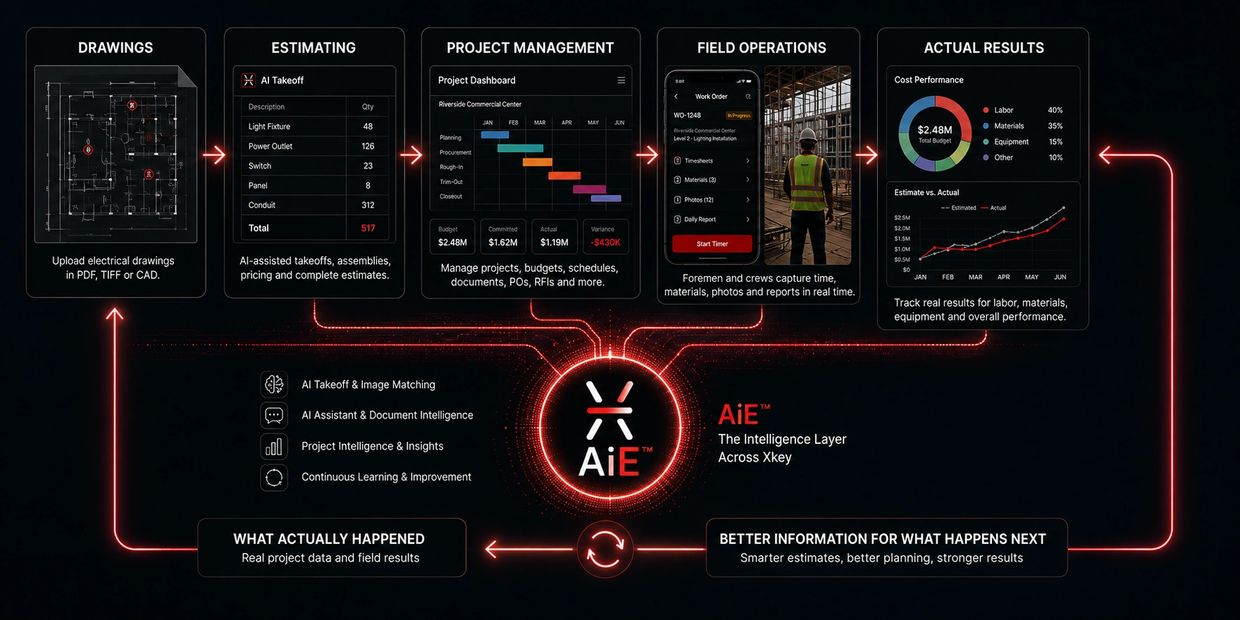
One Intelligence Layer. Across Your Entire Business.
AiE doesn't live in one feature. It connects the Xkey platform.
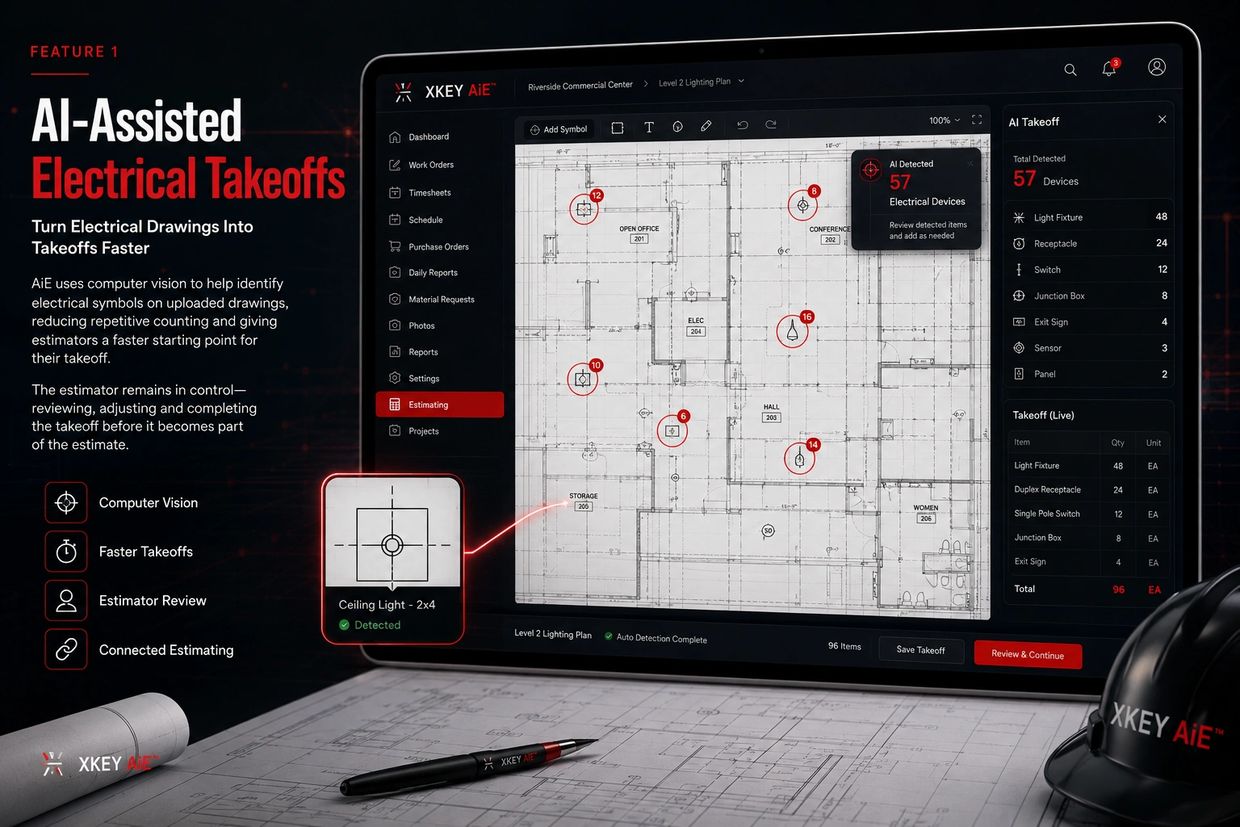
AI-Assisted Electrical Takeoffs
Turn Electrical Drawings Into Takeoffs Faster
AiE uses computer vision to help identify electrical symbols on uploaded drawings, reducing repetitive counting and giving estimators a faster starting point for their takeoff.
The estimator remains in control—reviewing, adjusting and completing the takeoff before it becomes part of the estimate.
Benefits: Computer Vision • Faster Takeoffs • Estimator Review • Connected Estimating
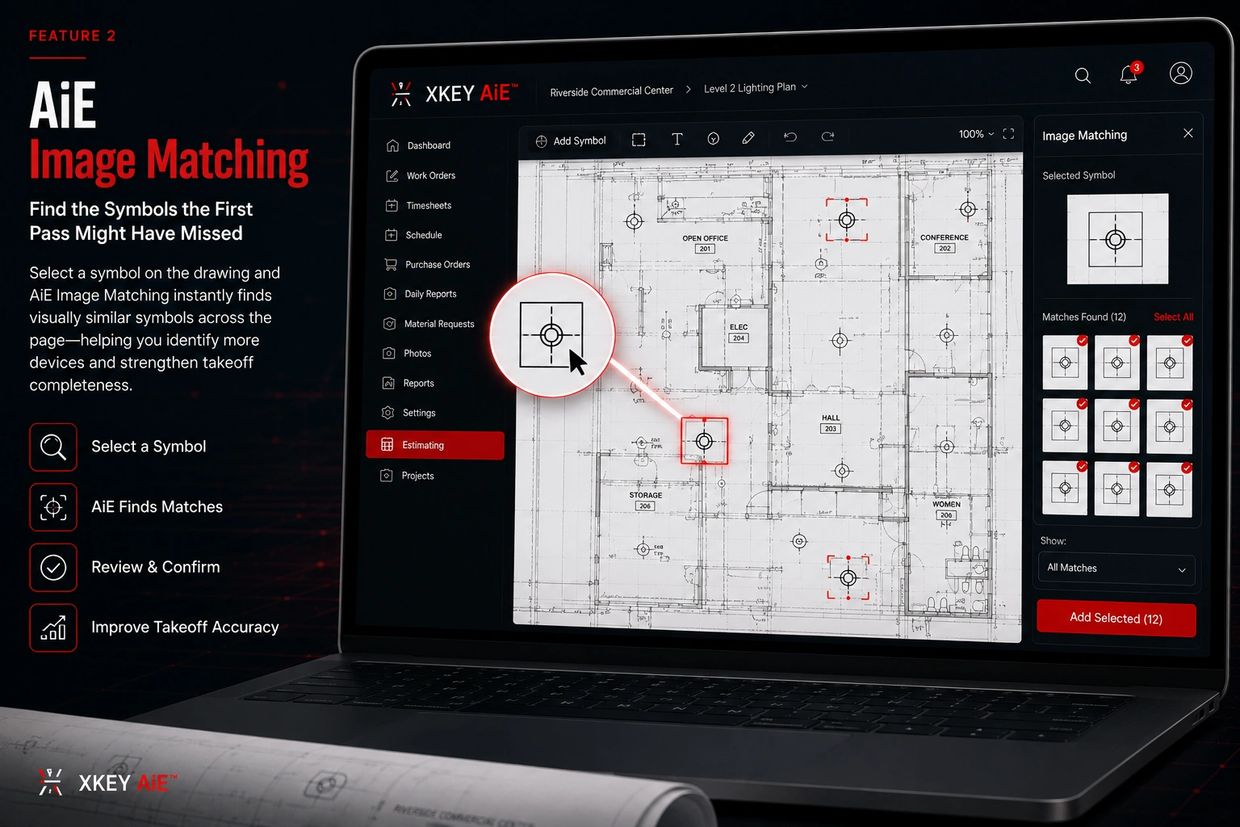
AiE Image Matching
Find the Symbols the First Pass Might Have Missed
Select a symbol directly from the drawing and AiE Image Matching searches the page for visually similar symbols—helping estimators identify additional devices quickly and strengthen takeoff completeness.
Benefits: Visual Search • Drawing Recognition • Faster Review • Improved Takeoff Completeness
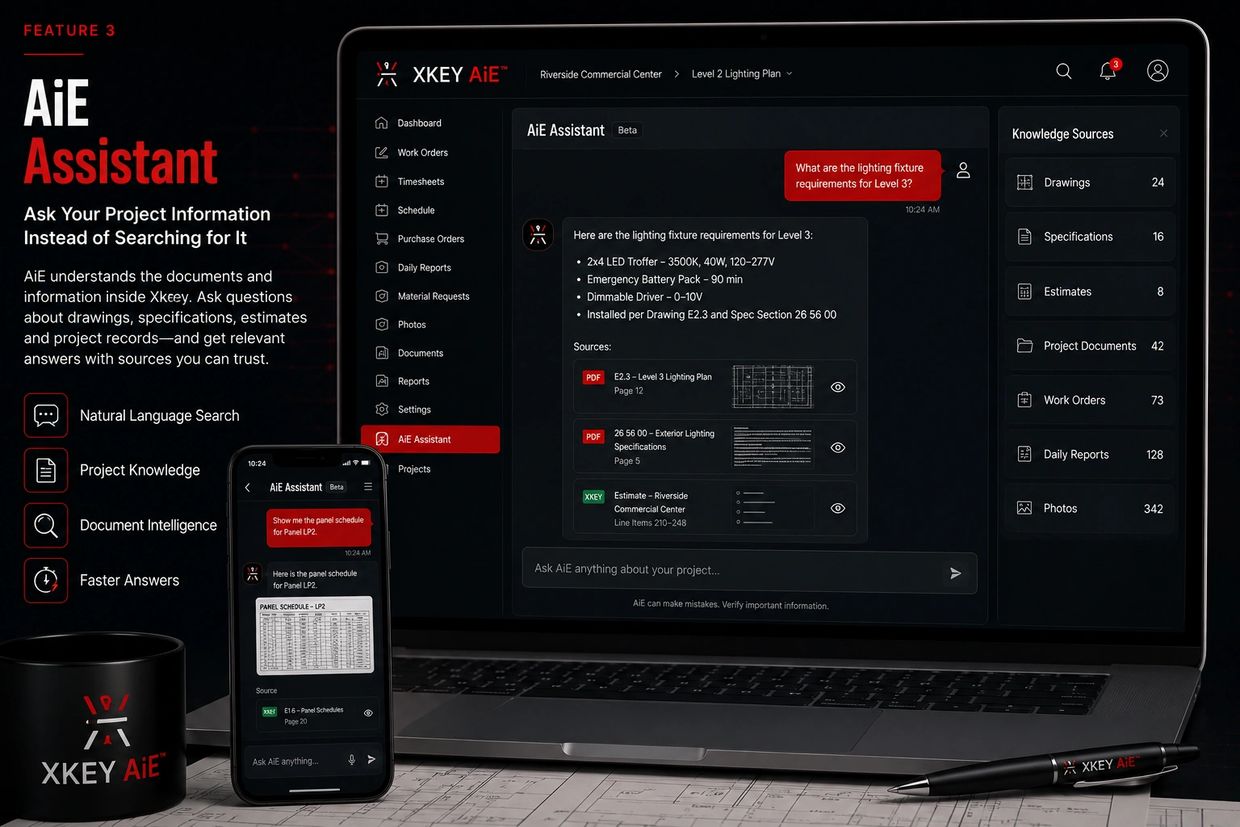
AiE Assistant
Ask Your Project Information Instead of Searching for It
AiE is being designed to understand the documents and information stored within Xkey. Ask questions about drawings, specifications, estimates, project records and other connected information and get relevant answers without manually searching through files.
Benefits: Natural-Language Search • Project Knowledge • Document Intelligence • Faster Answers
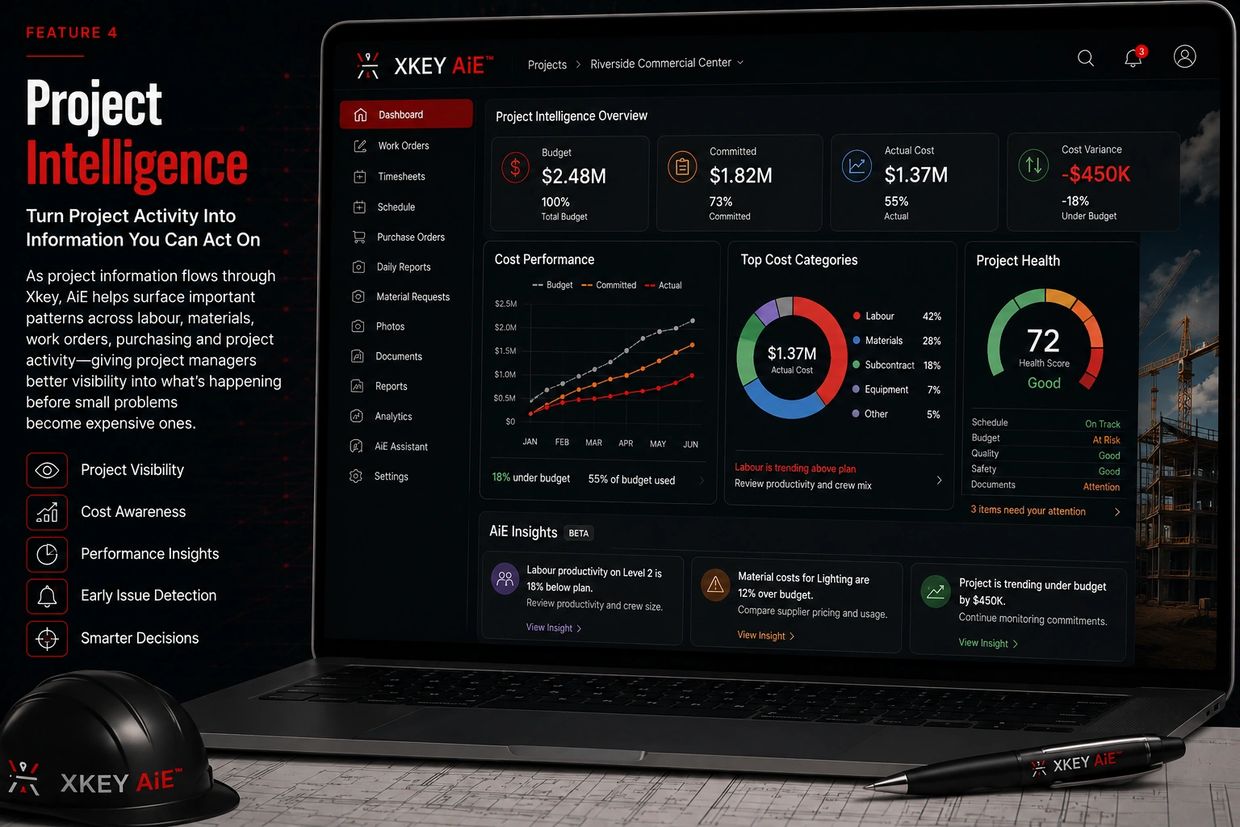
Project Intelligence
Turn Project Activity Into Information You Can Act On
As project information flows through Xkey, AiE can help surface important patterns across labor, materials, work orders, purchasing and project activity—giving project managers better visibility into what's happening before small problems become expensive ones.
Benefits: Project Visibility • Cost Awareness • Performance Insights • Earlier Decisions
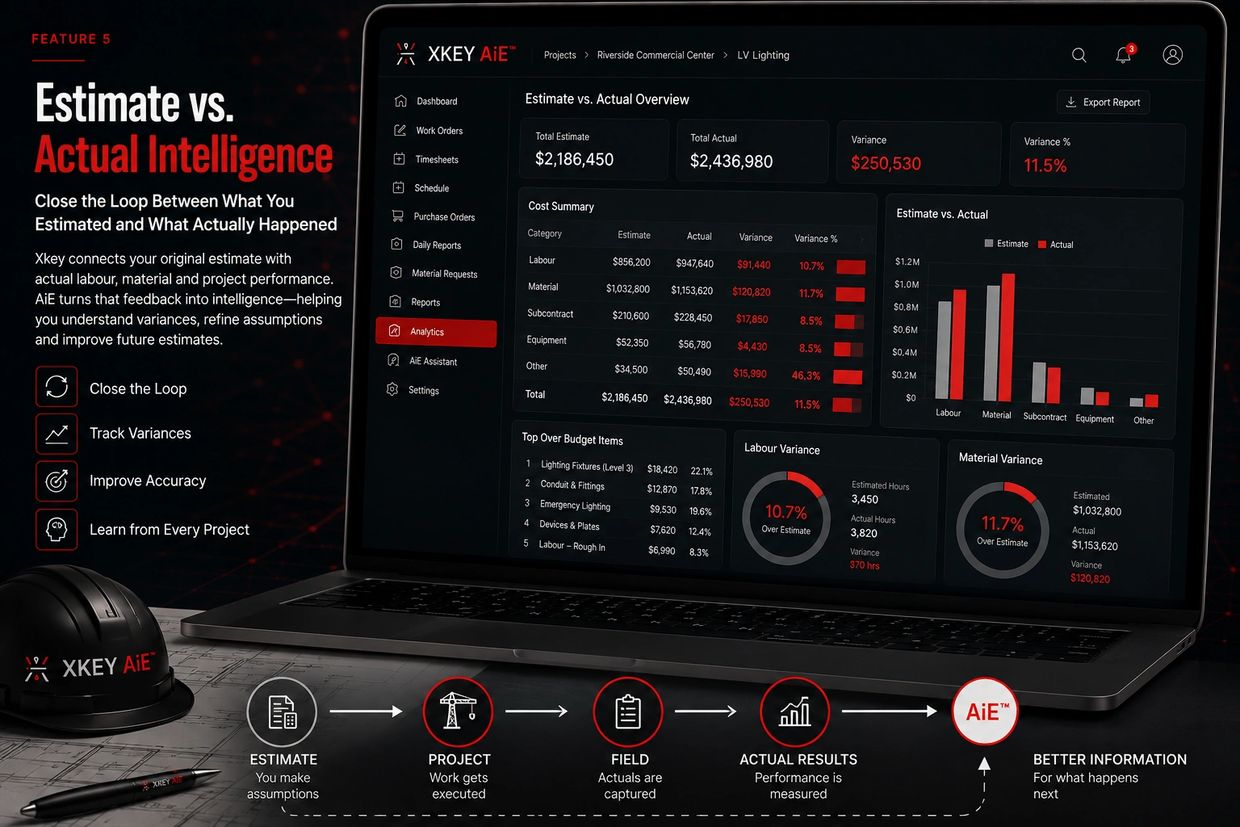
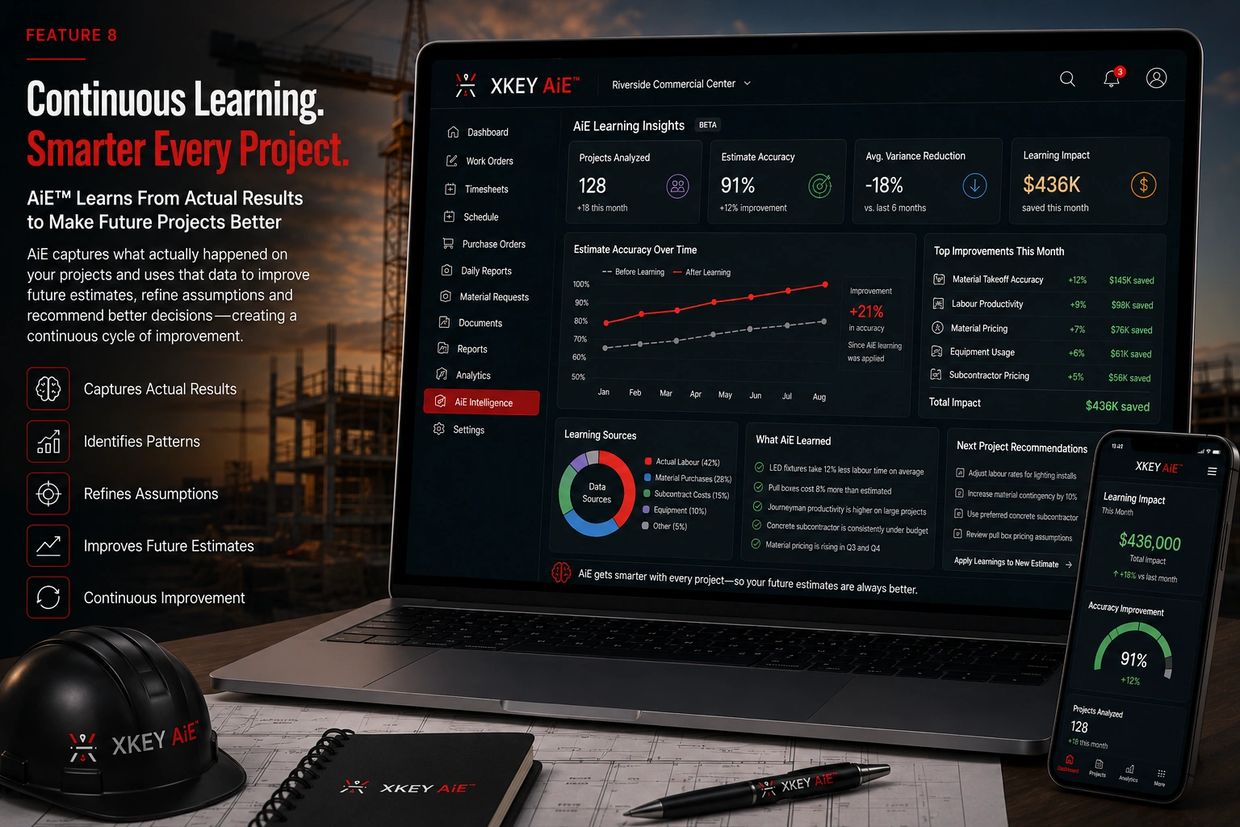
Estimate vs. Actual Intelligence
Close the Loop Between What You Estimated and What Actually Happened
Xkey connects the original estimate with actual labor, material and project performance. AiE can use that feedback to help teams understand where assumptions differed from real-world results.
Benefits: Estimate Feedback • Labor Variance • Material Variance • Historical Performance
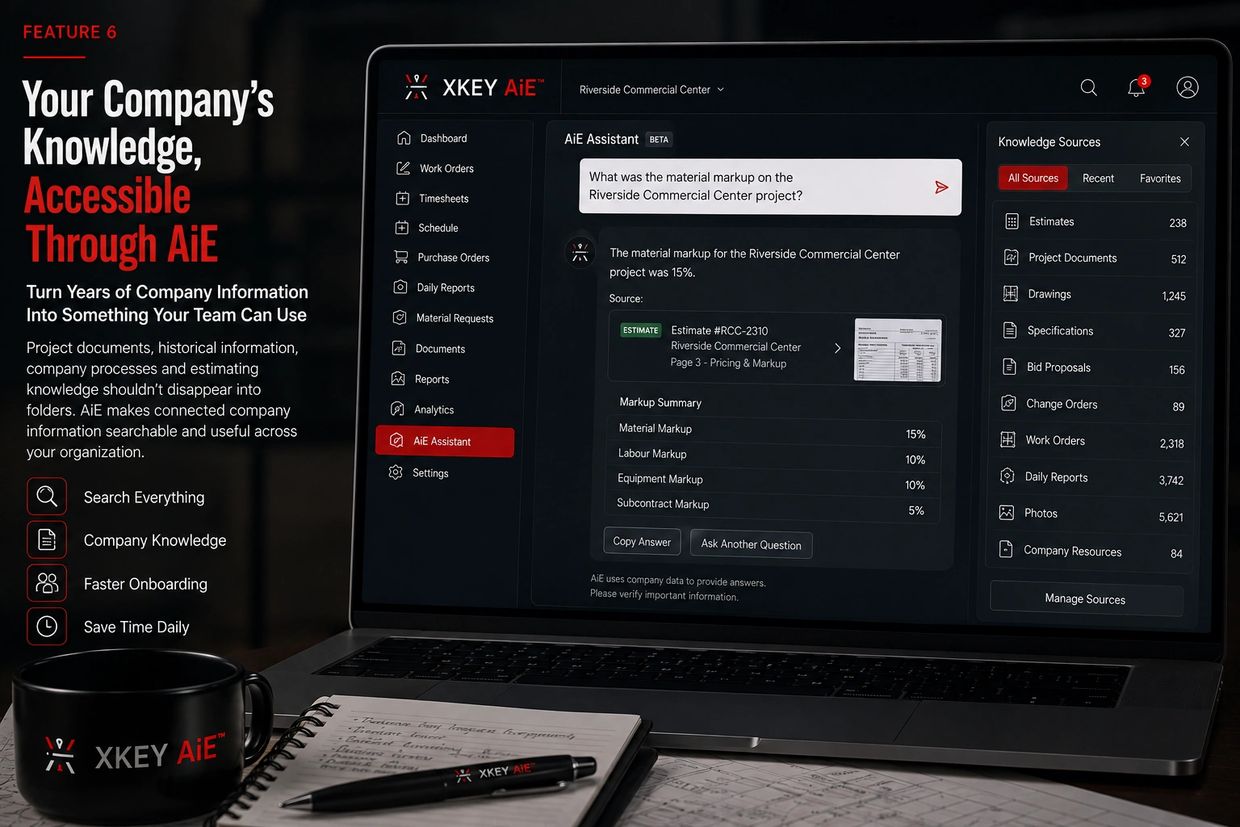
Your Company's Knowledge, Accessible Through AiE
Turn Years of Company Information Into Something Your Team Can Actually Use
Project documents, historical information, company processes and estimating knowledge shouldn't disappear into folders. AiE is being designed to make connected company information searchable and useful across your organization.
Benefits: Company Knowledge • Historical Projects • Document Search • Faster Onboarding
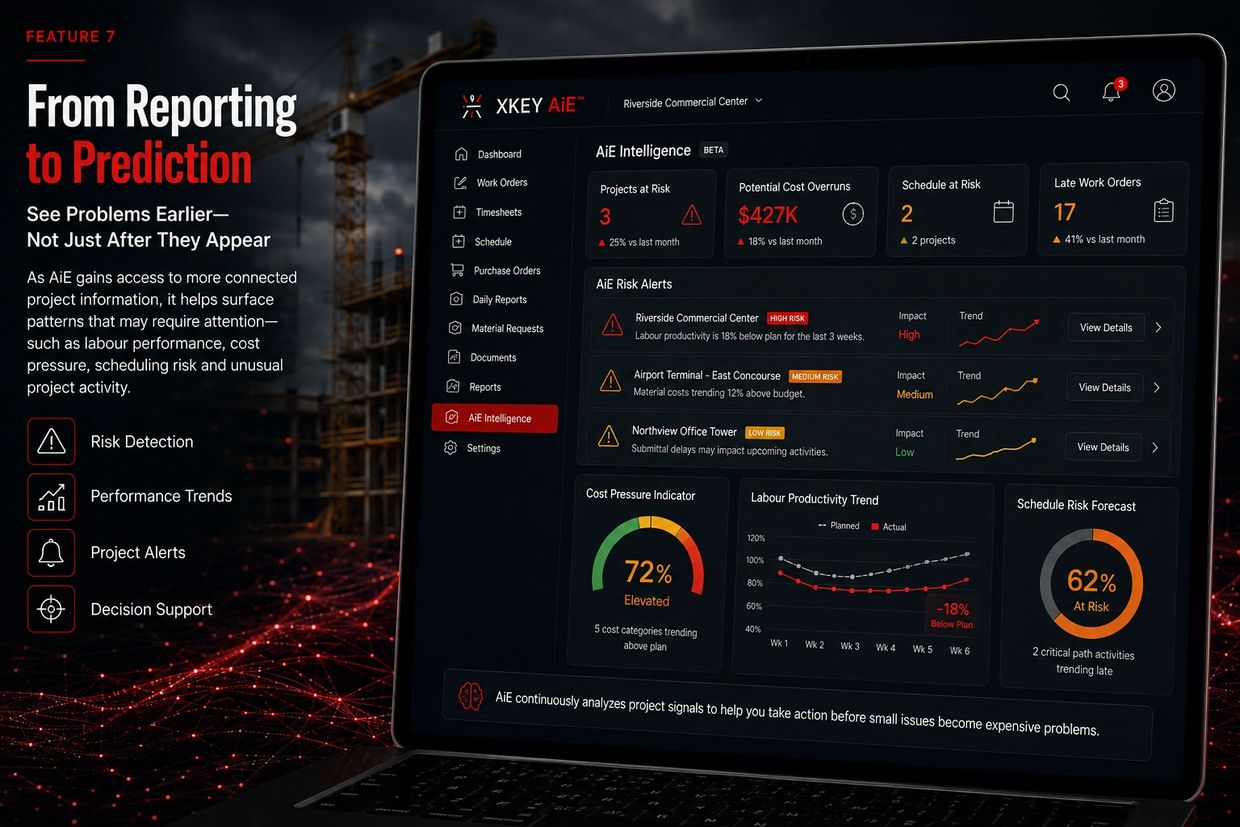
From Reporting to Prediction
See Problems Earlier—not Just After They Appear
As AiE gains access to more connected project information, the goal is to move beyond reporting what already happened toward identifying patterns that may require attention—such as labor performance, cost pressure, scheduling risk and unusual project activity.
Benefits: Risk Detection • Performance Trends • Project Alerts • Decision Suppor
Every Project Creates Better Information
Your Completed Work Becomes an Advantage for the Next Job
Every estimate creates assumptions. Every completed project creates actual results. By connecting the two, Xkey creates a feedback loop that can help your company understand performance and continuously improve how future work is estimated and managed.
Benefits: Closed-Loop Feedback • Historical Intelligence • Better Benchmarking • Continuous Improvement
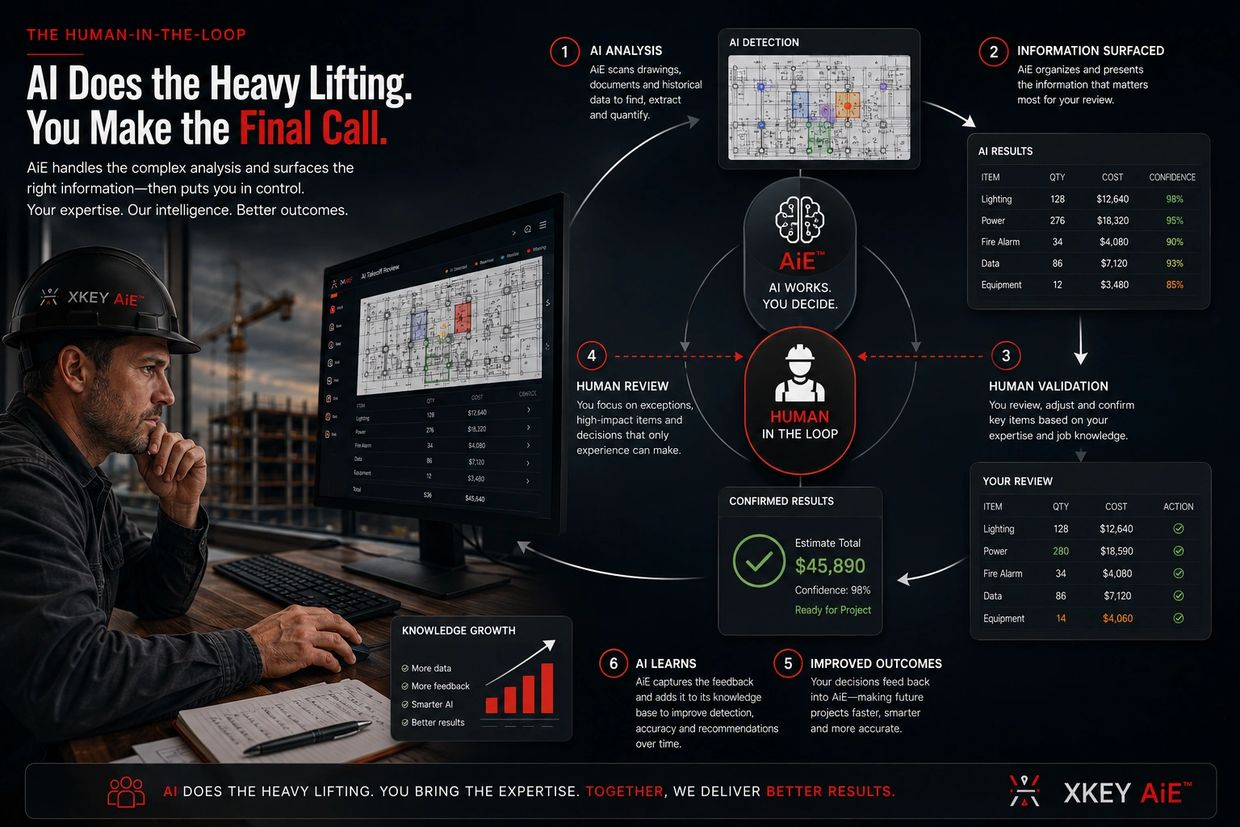
AI Assists. Your Team Decides.
Built to Strengthen Expertise—not Replace It.
Electrical estimating and project management require judgment. AiE is designed to accelerate repetitive work, surface information and support better decisions while keeping estimators, project managers and field professionals in control.
See What Happens When Your Software Starts Working With You
AiE brings artificial intelligence into the workflow electrical contractors already understand—from drawings and estimating through project execution and field performance.